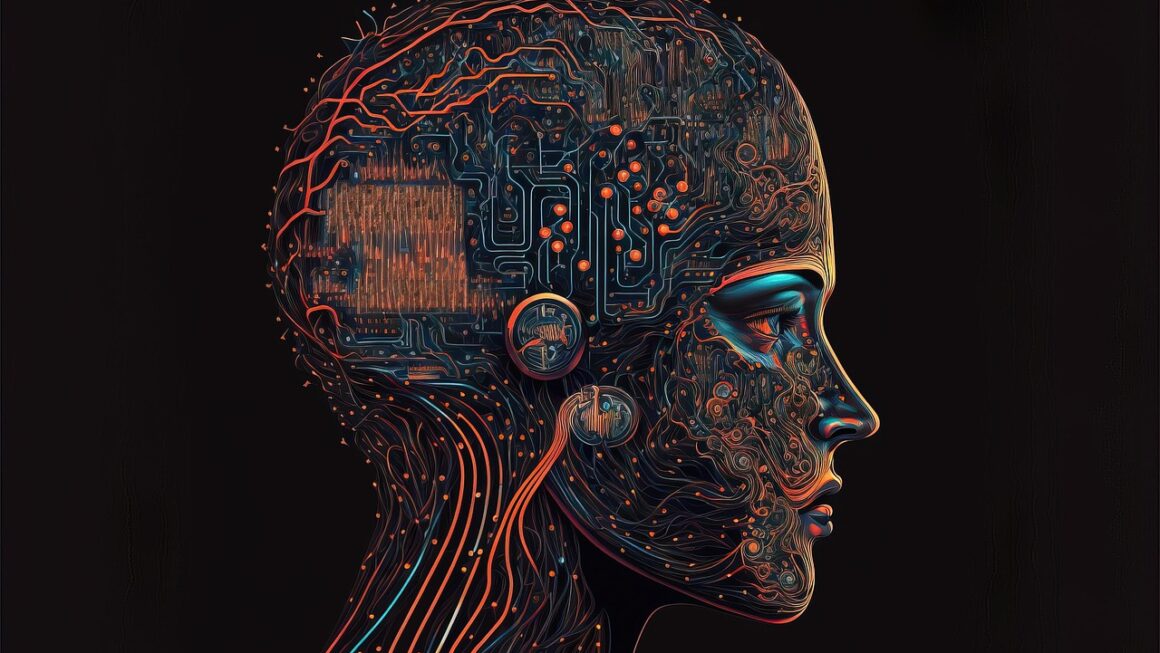

Artificial intelligence (AI) is no longer a futuristic fantasy; it’s a tangible force reshaping industries and daily life. From self-driving cars to personalized recommendations, AI’s impact is undeniable. This comprehensive guide explores the diverse facets of AI, delving into its underlying principles, practical applications, and potential future. Whether you’re a seasoned tech enthusiast or simply curious about the buzz, prepare to unravel the complexities and discover the transformative power of artificial intelligence.
What is Artificial Intelligence?
Defining Artificial Intelligence
Artificial Intelligence, at its core, is the simulation of human intelligence processes by computer systems. These processes include:
- Learning (acquiring information and rules for using the information)
- Reasoning (using rules to reach approximate or definite conclusions)
- Problem-solving (formulating strategies to solve issues)
- Perception (using sensors to understand the environment)
- Natural Language Processing (understanding and generating human language)
The goal of AI is to create machines that can perform tasks that typically require human intelligence. This isn’t just about mimicking human behavior; it’s about building systems that can adapt, learn, and improve over time.
Types of Artificial Intelligence
AI is often categorized based on its capabilities and functionality:
- Narrow or Weak AI: Designed and trained for a specific task. This is the most common type of AI today. Examples include spam filters, recommendation engines, and voice assistants like Siri or Alexa.
- General or Strong AI: Possesses human-level intelligence and can perform any intellectual task that a human being can. General AI does not yet exist. This involves a system that can reason, solve problems, and learn in a wide range of contexts.
- Super AI: Surpasses human intelligence in every aspect. This is a theoretical stage of AI development where machines are vastly more capable than humans. Its existence is speculative and raises significant ethical considerations.
A Brief History of AI
The concept of artificial intelligence dates back to ancient myths of artificial beings. However, the modern field of AI began in the mid-20th century with thinkers like Alan Turing, who explored the possibility of machines that could think. Key milestones include:
- 1950: Alan Turing proposes the Turing Test.
- 1956: The Dartmouth Workshop, considered the birth of AI as a field.
- 1960s-1970s: Early AI programs demonstrate problem-solving and natural language processing.
- 1980s: Expert systems gain popularity in specific domains.
- 2000s-Present: Advancements in machine learning and deep learning lead to breakthroughs in computer vision, natural language processing, and robotics.
Machine Learning: The Engine of Modern AI
What is Machine Learning?
Machine learning (ML) is a subset of AI that allows systems to learn from data without being explicitly programmed. Instead of relying on pre-defined rules, ML algorithms identify patterns in data and use those patterns to make predictions or decisions.
- Key Idea: Provide algorithms with data, and they will learn from it, improving their performance over time.
Types of Machine Learning
- Supervised Learning: The algorithm is trained on labeled data, meaning the correct output is provided for each input. For example, training an algorithm to classify images of cats and dogs, where each image is labeled as either “cat” or “dog.”
Example: Predicting housing prices based on features like size, location, and number of bedrooms.
- Unsupervised Learning: The algorithm is trained on unlabeled data and must find patterns and structures on its own. Examples include clustering customers based on purchasing behavior or identifying anomalies in financial transactions.
Example: Grouping customers into different segments based on their spending habits.
- Reinforcement Learning: The algorithm learns through trial and error by interacting with an environment and receiving rewards or penalties for its actions. Examples include training a computer to play a game or control a robot.
* Example: Training a self-driving car to navigate roads by rewarding it for staying in its lane and penalizing it for collisions.
Deep Learning: A Powerful Subset of Machine Learning
Deep learning (DL) is a more complex form of machine learning that uses artificial neural networks with multiple layers (hence “deep”). These networks can learn intricate patterns from large datasets, leading to significant advancements in areas like image recognition, natural language processing, and speech recognition.
- Key Feature: Deep learning models can automatically learn which features are most important for a given task, reducing the need for manual feature engineering.
Practical Examples of Machine Learning
- Netflix Recommendations: Machine learning algorithms analyze your viewing history to suggest movies and TV shows you might enjoy.
- Spam Filters: Email providers use machine learning to identify and filter out spam emails.
- Fraud Detection: Banks and credit card companies use machine learning to detect fraudulent transactions.
- Medical Diagnosis: AI-powered tools can analyze medical images and assist doctors in diagnosing diseases.
Applications of Artificial Intelligence Across Industries
Healthcare
AI is revolutionizing healthcare, offering solutions for:
- Diagnosis: AI algorithms can analyze medical images, such as X-rays and MRIs, to detect diseases earlier and more accurately.
- Drug Discovery: AI can accelerate the drug discovery process by identifying potential drug candidates and predicting their effectiveness.
- Personalized Medicine: AI can analyze patient data to tailor treatment plans to individual needs.
- Robotic Surgery: AI-powered robots can assist surgeons with complex procedures, improving precision and reducing recovery times.
Finance
AI is transforming the financial industry with applications such as:
- Fraud Detection: AI algorithms can detect fraudulent transactions in real-time, protecting businesses and consumers.
- Algorithmic Trading: AI can automate trading decisions based on market data and trends.
- Risk Management: AI can assess and manage financial risks more effectively.
- Customer Service: AI-powered chatbots can provide instant customer support and answer frequently asked questions.
Retail
AI is enhancing the retail experience in several ways:
- Personalized Recommendations: AI algorithms can recommend products to customers based on their browsing history and purchase patterns.
- Inventory Management: AI can optimize inventory levels and predict demand to minimize waste and maximize profits.
- Chatbots: AI-powered chatbots can assist customers with their purchases and provide customer support.
- Predictive Analytics: AI can analyze customer data to predict future sales trends and optimize marketing campaigns.
Manufacturing
AI is optimizing manufacturing processes through:
- Predictive Maintenance: AI can predict when equipment is likely to fail, allowing for proactive maintenance and reducing downtime.
- Quality Control: AI-powered vision systems can detect defects in products more accurately than human inspectors.
- Robotics: AI-powered robots can automate repetitive tasks, improving efficiency and reducing labor costs.
- Supply Chain Optimization: AI can optimize supply chain operations, reducing costs and improving delivery times.
Ethical Considerations and Challenges of AI
Bias in AI
One of the major concerns surrounding AI is the potential for bias. If the data used to train AI algorithms is biased, the resulting AI system will also be biased. This can lead to unfair or discriminatory outcomes.
- Example: Facial recognition systems trained primarily on images of white faces may be less accurate when identifying faces of people of color.
To mitigate bias in AI, it is crucial to:
- Use diverse and representative datasets for training.
- Develop algorithms that are fair and unbiased.
- Regularly audit AI systems for bias.
Job Displacement
The increasing automation of tasks by AI raises concerns about job displacement. As AI-powered systems become more capable, they may replace human workers in certain industries.
- Actionable Takeaway: Focus on acquiring skills that are complementary to AI, such as creativity, critical thinking, and emotional intelligence. Investing in education and retraining programs to help workers adapt to the changing job market.
Privacy Concerns
AI systems often require vast amounts of data to function effectively, raising concerns about privacy. The collection and use of personal data by AI systems must be carefully regulated to protect individuals’ privacy rights.
- Best Practices: Implement strong data security measures, obtain informed consent from users before collecting their data, and be transparent about how data is used.
Safety and Security
As AI systems become more autonomous, ensuring their safety and security is paramount. Malicious actors could potentially exploit vulnerabilities in AI systems to cause harm.
- Critical Point: Develop robust security measures to protect AI systems from cyberattacks and ensure that they operate safely and reliably.
Future Trends in Artificial Intelligence
Explainable AI (XAI)
Explainable AI (XAI) aims to make AI systems more transparent and understandable. Instead of being “black boxes,” XAI systems can explain their decisions and reasoning processes.
- Benefit: Builds trust in AI systems and enables humans to understand and correct errors.
Edge AI
Edge AI involves processing data locally on devices, rather than sending it to the cloud. This reduces latency, improves privacy, and enables AI to be used in remote or offline environments.
- Example: Self-driving cars that can react quickly to changing conditions without relying on a cloud connection.
Quantum AI
Quantum computing has the potential to dramatically accelerate AI development. Quantum AI could enable the creation of more powerful and efficient AI algorithms.
- Potential Impact: Could revolutionize fields such as drug discovery, materials science, and financial modeling.
Ethical AI Frameworks
As AI becomes more prevalent, the development of ethical frameworks and regulations is crucial. These frameworks will guide the development and deployment of AI in a responsible and ethical manner.
- Goal: Ensure that AI is used for the benefit of humanity and that its potential risks are mitigated.
Conclusion
Artificial intelligence is a powerful and transformative technology with the potential to reshape industries and improve our lives in countless ways. By understanding the fundamentals of AI, exploring its diverse applications, and addressing its ethical challenges, we can harness its power for good and create a future where AI benefits everyone. The journey into AI is ongoing, demanding continuous learning, adaptation, and a proactive approach to its development and deployment.